Hypermobility treatment in Collingwood for people whose flexible joints bring pain, a sense of instability, fatigue or joints that overload easily.
Being hypermobile means your joints move beyond the typical range. For some people that causes no problems at all, but for others it brings pain, a sense of instability, fatigue, clumsiness and joints that feel like they give way or overload easily.
At Lionheart in Collingwood, we work with a lot of hypermobile people who have been told they are just flexible, or who have bounced between practitioners without a clear plan, and who are tired of niggles, subluxations and injuries that keep cropping up.
Hypermobility itself is not a problem in need of correcting, and we are careful not to over-medicalise it. The goal is to build the stability, strength and control that let you move confidently and comfortably in the range you have, so your joints feel supported rather than vulnerable.
It is worth getting assessed if you are hypermobile and experience:
Hypermobility can sometimes be part of a broader condition such as an Ehlers-Danlos syndrome. If you have concerns about wider symptoms affecting your skin, digestion, heart rate or other systems, it is worth discussing these with your GP, and we can work as part of that wider team. Please see your doctor promptly if you have chest pain, palpitations, fainting or a family history of aortic or heart problems.
Please also see your GP or go to an emergency department if your pain follows a significant injury or fall, comes with fever or unexplained weight loss, or if you notice new weakness, numbness, or loss of bladder or bowel control. In an emergency, call 000.
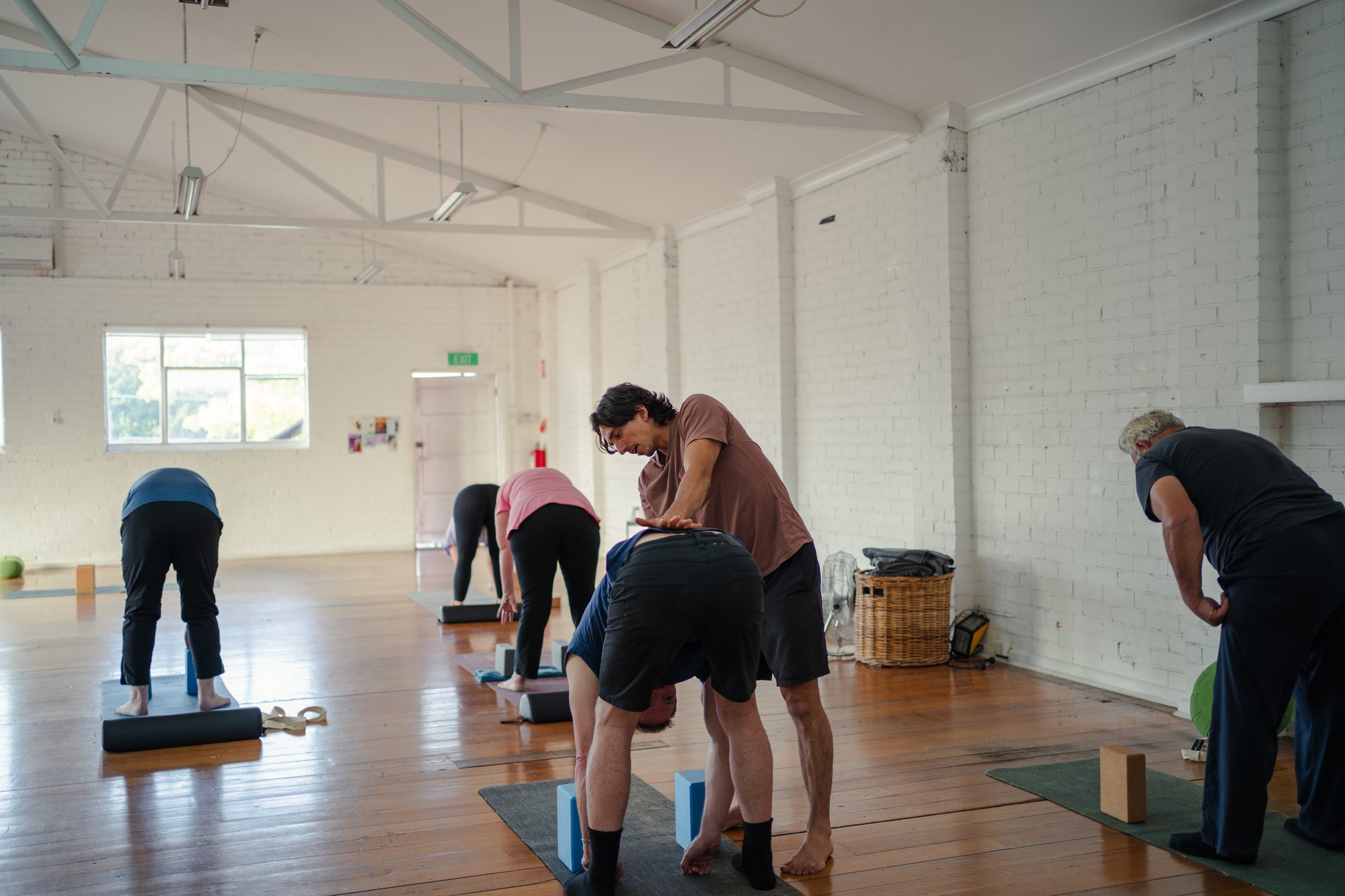
Jesse will assess your movement, stability, strength and control, and identify the joints and patterns giving you trouble. Hypermobile bodies tend to respond best to a specific, well-graded approach: too little challenge and nothing changes, too much or the wrong kind and things flare. Treatment focuses on building active stability and control around vulnerable joints, improving how your body senses its own position, and progressing load carefully.
DNS-informed exercise is one approach we use for hypermobility. It aims to retrain the deep stabilising system so joints are supported by good timing and co-activation rather than being held at the end of their range. This developmental, control-based approach works on the foundation hypermobile bodies often lack.
Progressive strength and control work is the core of long-term management. Personal training builds the muscular support and stamina that help protect your joints, tailored to your body and progressed at a pace that builds capacity without provoking flares.
Hypermobile bodies often carry a lot of muscular tension as muscles work overtime to compensate for a lack of passive stability. Remedial massage can ease this overwork and discomfort, supporting the active work you do in rehabilitation.
Book an Initial Physiotherapy Appointment · Not sure? Book a free Insight Call
The first session is a thorough look at how you move, where you feel unstable, and what tends to cause your pain and injuries. Your physiotherapist takes a full history, since hypermobility affects the whole body rather than one area.
From there we build a plan focused on stability, strength and control, carefully dosed for a hypermobile body. Progress tends to be steady rather than instant, and consistency matters.
How long it takes depends on what is going on, how long you've had it, and what your life asks of your body. After your first appointment you'll have a clear picture of what to expect, and we'll review progress with you as we go.
Not always. Many hypermobile people have no symptoms. It becomes worth addressing when it causes pain, instability, frequent injuries or fatigue, which is where a targeted strength and control program may help.
Usually the priority is stability and strength rather than more stretching, since the joints already move plenty. We focus on control and support, and use mobility work selectively where it genuinely helps.
Without good active stability, hypermobile joints can move past where the muscles are ready to control them, which can lead to strains and slips. Building that control is one way to work on reducing injuries.
Hypermobility is part of how your body is built, not something to cure. What may change is how well supported, strong and confident your joints feel, and many people find that improves, though results vary.
Yes. If your hypermobility is part of a broader condition, we are glad to work alongside your GP, specialists and other practitioners as part of your team.
Hypermobility does not have to mean constant niggles and caution. With the right kind of strength and control work, many people feel more stable and more at ease in their body, and we will give you an honest view of your situation after assessment.
Book your hypermobility assessment today.
188–190 Johnston Street, Collingwood, Melbourne
0468 496 596 · info@lionheart.earth