Vertigo and dizziness treatment in Collingwood. A spinning or unsteady feeling can be deeply unsettling, and even short episodes can affect your confidence, balance and day.
Vertigo is the sensation that you or the room around you is spinning or moving when it is not. It can be deeply unsettling, and even short episodes can affect your confidence, balance and ability to get through the day.
At Lionheart in Collingwood, we assess and treat vertigo and dizziness with vestibular physiotherapy, and we see people who have had sudden spinning episodes with certain head movements, as well as those left with lingering unsteadiness after an illness or accident.
Many common causes of vertigo can be helped with treatment. For the most common, BPPV, specific repositioning techniques are the recommended first-line treatment once it is correctly identified. The key is an accurate assessment, because different causes of dizziness need very different management.
It is worth getting assessed if you experience:
Seek urgent medical care if dizziness comes with sudden severe headache, double vision, slurred speech, facial or limb weakness, numbness, difficulty walking, or new hearing loss. These can signal a more serious cause that needs immediate assessment.
Please also see your GP or go to an emergency department if your symptoms follow a significant injury or fall, come with fever or unexplained weight loss, or if you notice loss of bladder or bowel control. In an emergency, call 000.
Assessment is everything with vertigo. Jesse will take a careful history, then use specific positional and eye-movement tests to identify the likely cause. We confirm BPPV with positional testing before any repositioning. For BPPV, specific repositioning manoeuvres (such as the Epley) are the recommended first-line treatment and are often effective, sometimes within one or a few visits. For other vestibular problems, a tailored program of gaze stability, habituation and balance exercises aims to retrain the system and reduce symptoms over time.
Dizziness often leaves people cautious, which reduces movement and lets balance decondition further. A graded program of balance and movement work aims to rebuild steadiness and confidence, which is an important part of recovery from many vestibular conditions.
When neck stiffness and dysfunction contribute to dizziness, treating the upper neck with manual therapy and exercise may reduce symptoms. Assessment establishes whether the neck is playing a role.
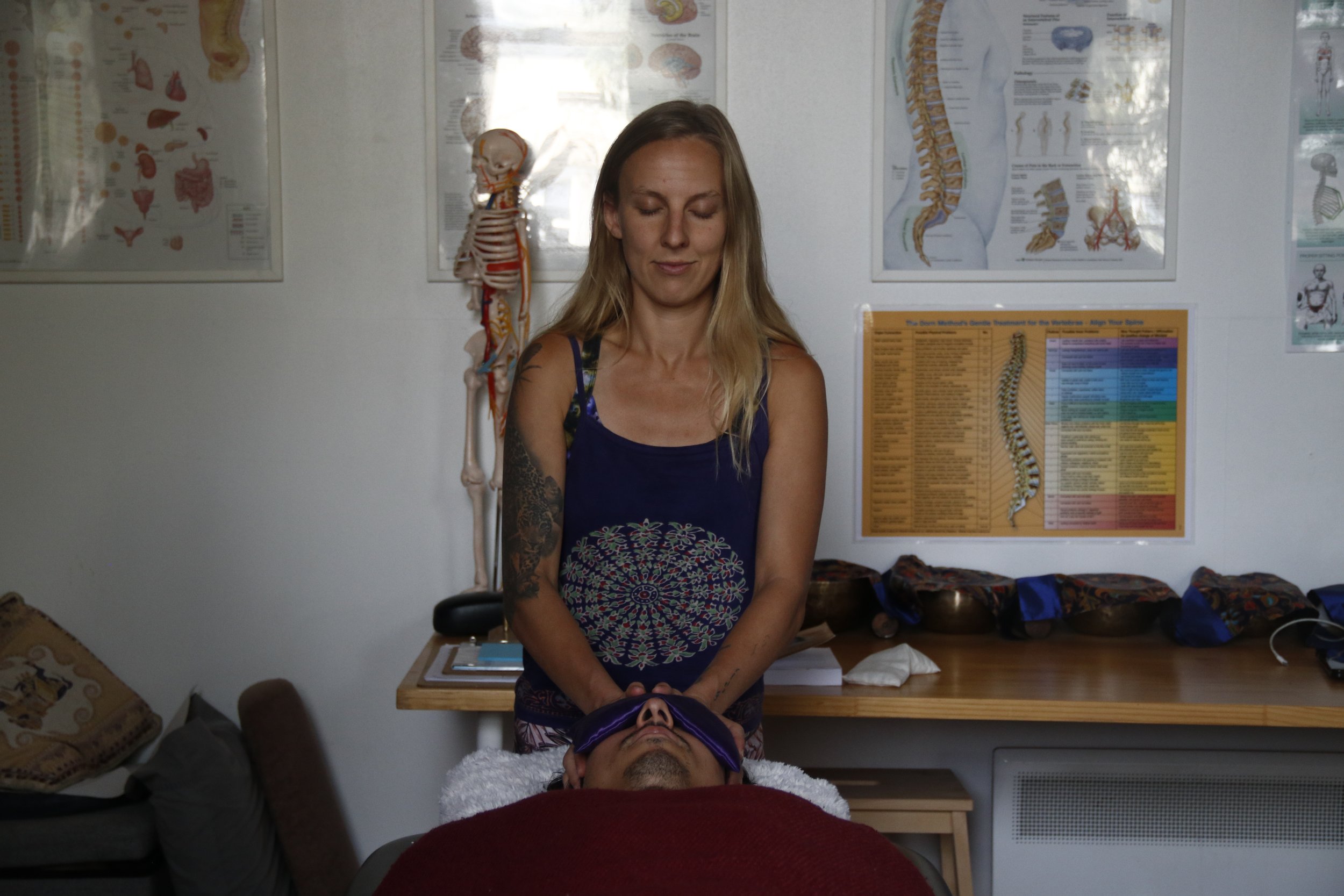
Vertigo and chronic dizziness are draining. Reiki is a gentle complementary practice that some people find helps them relax alongside the physical rehabilitation. It is optional and offered separately from physiotherapy.
Book an Initial Physiotherapy Appointment · Not sure? Book a free Insight Call
The first session is a thorough assessment to identify the cause of your dizziness. Your physiotherapist takes a detailed history and performs specific positional and balance tests, which may briefly bring on your symptoms so we can see exactly what is happening.
Once the likely cause is clear, treatment often begins straight away. For BPPV this may mean repositioning techniques in the first session. For other causes you will start a tailored exercise program and get clear guidance on what to expect.
How long it takes depends on what is going on, how long you've had it, and what your life asks of your body. After your first appointment you'll have a clear picture of what to expect, and we'll review progress with you as we go.
For BPPV (the most common cause), specific repositioning manoeuvres are the recommended first-line treatment and are often effective, sometimes within one or a few visits. Other causes need a tailored program, and results vary.
BPPV happens when tiny crystals in the inner ear move into the wrong part of the balance canals, causing short bursts of spinning with certain head movements. It is common, not dangerous in itself, and treatable with repositioning manoeuvres.
Some tests may briefly bring on your symptoms, which is how we identify the cause. It usually settles quickly, and it means we can target treatment accurately.
In some cases, yes, neck dysfunction can contribute to dizziness. Assessment helps establish whether this is part of your picture so it can be addressed.
If your dizziness is new, severe or comes with any of the warning signs listed above, see your GP or seek urgent care. For positional and vestibular causes, physiotherapy is a recognised treatment option, and we will refer on if anything needs medical review.
Vertigo and dizziness can make the world feel unreliable. Many people improve with the right assessment and treatment, and we will give you an honest view of your situation.
Book your vertigo assessment today.
188–190 Johnston Street, Collingwood, Melbourne
0468 496 596 · info@lionheart.earth