Jaw pain and TMJ treatment in Collingwood. Your jaw works hard every day through talking, eating, clenching and grinding, and when it is irritated the effects can spread into the head, neck and face.
The jaw joint, or temporomandibular joint (TMJ), works hard every day through talking, eating and, for many people, clenching and grinding. When it becomes irritated, the effects can spread into the head, neck and face.
At Lionheart in Collingwood, we see a lot of people with jaw pain who did not realise physiotherapy could help, and who have often been clenching or grinding for years under stress without connecting it to their symptoms.
Jaw pain rarely sits on its own. The jaw, neck and posture work as a unit, and stress load plays a big role through clenching. Looking after the jaw usually means considering all of these together.
Jaw symptoms worth assessing include:
If you have jaw locking that will not release, significant swelling, or jaw pain with chest pain or shortness of breath, seek medical care promptly, as these need separate assessment.
Please also see your GP or go to an emergency department if your pain follows a significant injury or fall, comes with fever or unexplained weight loss, or if you notice new weakness, numbness, or loss of bladder or bowel control. In an emergency, call 000.
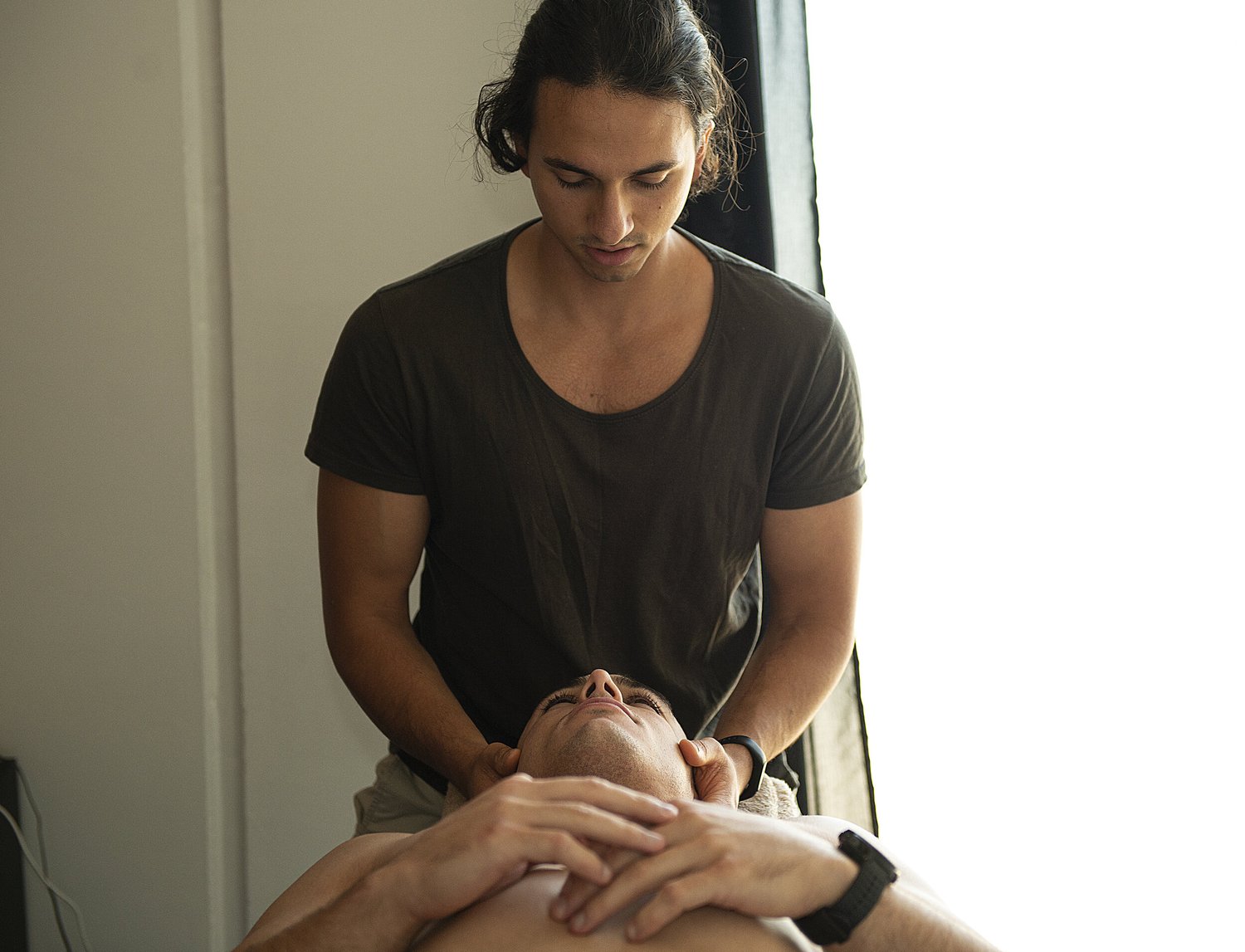
Jesse will assess how your jaw moves and loads, along with your neck and posture, since these are closely connected. Treatment can include gentle manual therapy to the jaw joint and muscles, release of the muscles that clench and grind, exercises to improve jaw control and movement, and strategies to reduce clenching through the day. Addressing the neck and posture is often an important part of the plan.
The muscles that move and clench the jaw, along with the neck and upper shoulders, frequently become tight and tender. Targeted release of these muscles, including intra-oral and facial work where appropriate, may ease discomfort and reduce the pull on the jaw joint.
Forward head posture increases load on the jaw. Improving posture and upper neck support can take strain off the TMJ, which is why postural and movement work is often part of the plan for jaw symptoms.
Clenching and grinding are strongly linked to stress. Reiki is a gentle complementary practice that some people find helps them relax. It is optional and offered separately from physiotherapy.
Book an Initial Physiotherapy Appointment · Not sure? Book a free Insight Call
The first session looks at the whole picture: your jaw movement, the muscles around it, and how your neck and posture contribute. Your physiotherapist takes a careful history, including clenching and grinding habits and stress patterns.
You will get a clear explanation of what may be contributing to your jaw pain and a plan to address it, and most people start treatment in the first session, along with practical strategies to reduce clenching.
How long it takes depends on what is going on, how long you've had it, and what your life asks of your body. Habits like night grinding can take longer to change. After your first appointment you'll have a clear picture of what to expect, and we'll review progress with you as we go. Where a dental splint or dental input is needed, we will coordinate with your dentist.
It can help many people. Physiotherapy addresses the jaw joint, the muscles that move and clench it, and the neck and posture that load it, often alongside dental care where a splint is involved. Results vary from person to person.
Clicking often relates to how the disc inside the jaw joint moves as you open and close. Clicking on its own is common and not always a problem, but when it comes with pain or locking it is worth assessing.
Stress can be a major contributor through clenching and grinding, which overload the jaw muscles. Looking at the physical symptoms and the tension behind them together tends to be useful.
Often both. Dentists manage the teeth and can provide splints for grinding. Physiotherapy addresses the joint, muscles, neck and posture. The two work well together, and we will refer to your dentist when it is needed.
They can contribute. The upper neck and jaw are closely linked, and neck stiffness can add to jaw symptoms. This is why we assess and treat the neck as part of jaw care.
Jaw pain affects eating, talking, sleep and concentration, and it often comes bundled with headaches and neck tension. Many people improve with conservative care, and we will give you an honest view of your situation after assessment.
Book your jaw pain assessment today.
188–190 Johnston Street, Collingwood, Melbourne
0468 496 596 · info@lionheart.earth