Neck pain treatment in Collingwood that looks beyond the neck. The way you sit, breathe, carry stress and move your shoulders all feed into how your neck loads through the day.
Neck pain is one of the most common reasons people come to see us, and it is rarely just about the neck. The way you sit, breathe, carry stress and move your shoulders all feed into how the neck loads through the day.
At Lionheart in Collingwood, we see a lot of people whose neck pain has crept in slowly from desk work, phone use and long hours at a screen, along with those who have woken up with a sudden stiff, locked neck and can barely turn their head.
Many people improve with the right assessment and treatment. The key is exploring what may be driving it, because a stiff joint, an irritated nerve and a tension-driven muscular pattern each need a different approach.
Neck symptoms worth getting properly assessed include:
If neck pain follows a significant accident, comes with severe headache, dizziness, visual changes, difficulty swallowing, or weakness and numbness in the arms or legs, seek medical assessment promptly. These are less common but need to be ruled out.
Please also see your GP or go to an emergency department if your pain comes with fever, unexplained weight loss, or night pain that is not eased by changing position, or if you notice loss of bladder or bowel control. In an emergency, call 000.
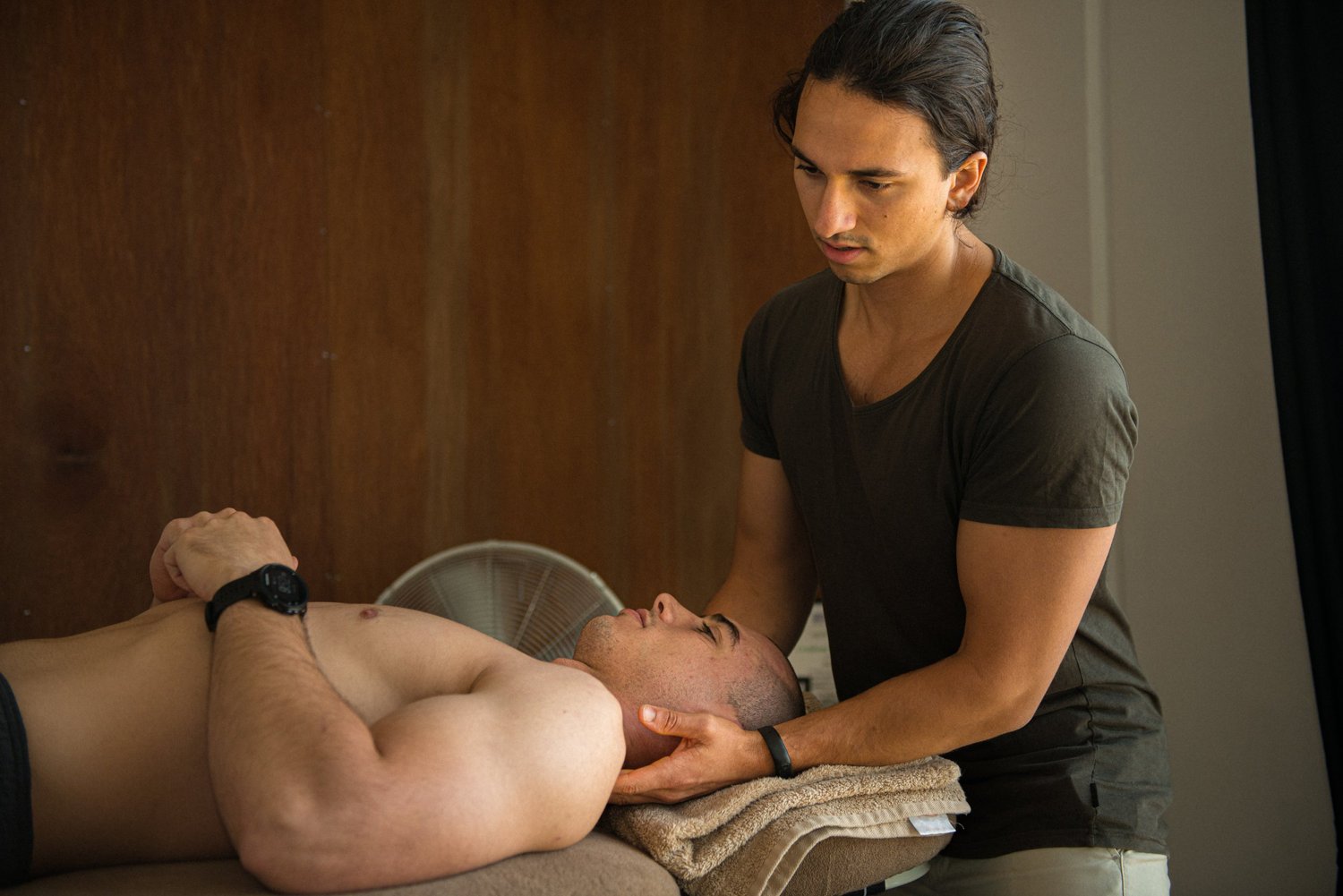
Assessment comes first. Jesse will take a detailed history, look at how your neck, shoulders and upper back move together, test nerve function where relevant, and work out which structures may be contributing to your symptoms. Treatment might include manual therapy to restore joint movement, soft tissue release, dry needling, and specific exercises to build support through the neck and upper back. Just as important is the practical side: how to set up your desk, position your screen and take load off the neck through the day.
The muscles at the base of the skull, along the sides of the neck and across the upper shoulders often become tight and guarded when the neck is irritated. This tension can pull on the joints, restrict movement and contribute to headaches. Targeted remedial massage can ease these layers of tension, and may make the rehabilitation work easier. Read more about our remedial massage services.
For people whose neck pain keeps coming back, DNS-informed exercise looks at a common contributing factor: the deep stabilising muscles of the neck and trunk may not be activating in the right sequence, so the surface muscles overwork and fatigue. It is one approach we use to retrain this pattern rather than only treating the sore area.
Once the acute pain has settled, personal training rebuilds the strength, control and postural endurance the neck needs to cope with a full day. Sessions are tailored to improve how the neck, shoulders and upper back share load.
Neck tension and stress tend to feed each other. Reiki is a gentle complementary practice that some people find helps them relax. It is optional and offered separately from physiotherapy.
Book an Initial Physiotherapy Appointment · Not sure? Book a free Insight Call
The first session is about exploring what may be contributing to your pain. Your physiotherapist will take a careful history, then assess how your neck moves, how your shoulders and upper back contribute, and whether any nerve involvement is present.
Next you will get a working diagnosis and a clear explanation of what may be driving your symptoms. Most people also start treatment in the first session, whether that is manual therapy, advice on posture and screen setup, or early exercises to ease the tension.
How long it takes depends on what is going on, how long you've had it, and what your life asks of your body. After your first appointment you'll have a clear picture of what to expect, and we'll review progress with you as we go.
Sustained desk and screen postures load the neck and upper back for hours at a time. As the deeper support muscles fatigue, the surface muscles take over and become sore. Treatment looks at both the tissue tension and the endurance and setup issues that may be contributing.
They can. Cervicogenic headaches start with stiffness or irritation in the upper neck joints and refer pain over the head. Treating the neck can help reduce these headaches for some people.
Pillow height and support can affect morning neck pain. We can talk through what tends to help based on how you sleep, rather than pushing a one-size-fits-all product.
Sometimes, but far from always. Disc-related neck pain usually has specific features such as arm symptoms. Assessment helps us work out whether a disc, a joint, or muscular tension is the main contributor.
Most neck pain does not need imaging to be assessed and managed. If your assessment shows signs that a scan would change management, your physiotherapist will organise it.
No, you can book directly. If you are claiming through certain schemes you may need a referral, and we can guide you on that.
Neck pain has a way of colouring your whole day, from concentration at work to how well you sleep. A thorough assessment and a plan built around you gives you the best foundation for getting your neck moving comfortably again.
Book your neck pain assessment today.
188–190 Johnston Street, Collingwood, Melbourne
0468 496 596 · info@lionheart.earth